
Joseph II, Holy Roman Emperor
Enlightened absolutist whose reforms faced opposition and partial failure.

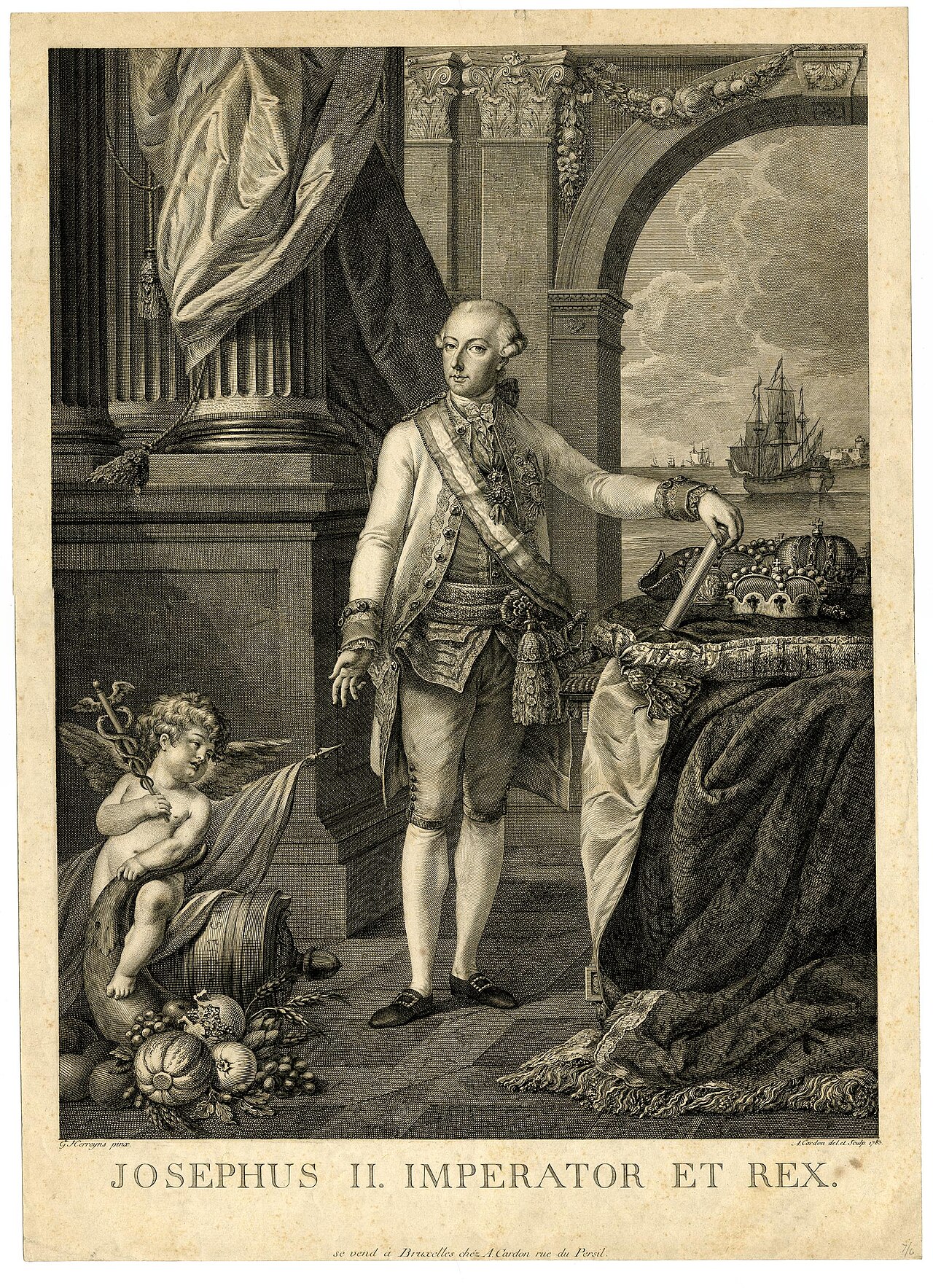
After Willem Jacob Herreyns / Antoine Cardon · CC0
He was the eldest son of Empress Maria Theresa and Emperor Francis I, and the first ruler in the Austrian dominions of the union of the Houses of Habsburg and Lorraine. A proponent of enlightened absolutism, his commitment to secularising, liberalising and modernising reforms resulted in significant opposition and failure to fully implement his programs, while his reckless foreign policy isolated Austria.
- field
- Monarchy, Enlightened absolutism
- nationality
- Austrian (Habsburg monarchy)
- known_for
- Josephinism; reforms in secularisation, liberalisation, and modernisation; patronage of Mozart and Salieri
Lore & Background
He was baptised the following day as Joseph Benedict Augustus Johann Anton Michael Adam, with Pope Benedict XIV and Augustus III of Poland as godfathers. His education was supervised by teachers including Pater Anton von Weger and Karl Joseph Batthyány, with instruction in Latin, classical studies, mathematics, and history. He had 15 siblings, six of whom died before adolescence. The marriage produced a daughter, Maria Theresa, and a second child who died shortly after birth. Joseph never remarried and died with no known surviving legitimate offspring, succeeded by his younger brother Leopold II. He was a friend to religious toleration, sought to reduce church power, relieve peasants of feudal burdens, and remove restrictions on trade and knowledge. His belief in the power of the state directed by reason, combined with absolutist convictions, led to opposition. Contemporaries described him as ambitious and despotic. He supported the arts, particularly composers Wolfgang Amadeus Mozart and Antonio Salieri.
Reader's Guide
Joseph II is significant as a leading figure of enlightened absolutism, ranked alongside Catherine the Great and Frederick the Great. His policies, known as Josephinism, aimed at secularisation, liberalisation, and modernisation, but faced substantial opposition and were not fully implemented. His reckless foreign policy isolated Austria despite some territorial gains. False but influential letters depict him as a more radical philosophe than he probably was. His legacy includes his patronage of the arts and his role as the first Habsburg-Lorraine ruler. The failure of his reforms highlights the limits of top-down enlightenment in a conservative society, and his isolationist foreign policy serves as a cautionary example. His death without legitimate heirs ended his direct line, passing the throne to his brother Leopold II.
Did You Know?
- Joseph II was baptised with the names Joseph Benedict Augustus Johann Anton Michael Adam.
- His first wife, Isabella of Parma, preferred the companionship of his sister Marie Christine.
- He never visited his second wife, Maria Josepha of Bavaria, during her final illness nor attended her funeral.
- False but influential letters depict him as a more radical philosophe than he probably was.
The Unprecedented Empire
Charles V's dominions represented something genuinely new in European history. Through a combination of inheritance and election, he held the Holy Roman Empire stretching from Germany into northern Italy, the Austrian hereditary lands, the Burgundian Low Countries, and the Spanish kingdoms of Castile and Aragon with their Italian possessions of Naples, Sicily, and Sardinia. Beyond Europe, he oversaw the continuation of Spanish colonisation in the Americas and a brief German colonisation effort there. The personal union of these European and American territories created the first collection of realms described as "the empire on which the sun never sets." He was head of the rising House of Habsburg, and his empire came to him largely through the marriages and deaths of his grandparents and parents rather than through conquest. He had no fixed capital and made forty journeys across his various realms, spending a quarter of his reign simply travelling between them.
War and Financial Exhaustion
Despite the peaceful manner in which his empire assembled itself, Charles V spent the bulk of his reign in active warfare. He fought to defend the Holy Roman Empire against the Protestant Reformation, to resist Ottoman expansion, and to counter French ambitions in Italy. The financial toll was staggering. He borrowed heavily from German and Italian bankers, and to service those debts he drew on the wealth of the Low Countries and the massive flows of silver from New Spain and Peru, which had fallen under his rule after the Spanish conquests of the Aztec and Inca empires. This influx of precious metal triggered widespread inflation across his territories. His military campaigns included the capture of Francis I at Pavia in 1525, the sacking of Rome in 1527 by his own mutinous soldiers, the defence of Vienna against the Ottomans, the taking of Milan and Tunis in 1535, and the frustrated Algiers expedition in the early 1540s.
The Reformation and Religious Settlement
Charles V's relationship with the Protestant Reformation defined much of his reign. In 1521, siding with Pope Leo X, he declared Martin Luther an outlaw at the Diet of Worms. Yet the religious fracture proved far more durable than a single imperial decree could mend. After years of negotiation with Pope Paul III, Charles secured the organisation of the Council of Trent in 1545, though the Lutheran Schmalkaldic League refused to recognise its authority, triggering a war that Charles ultimately won. However, Henry II of France threw fresh support behind the Lutheran cause and deepened the Franco-Ottoman alliance with Suleiman the Magnificent, complicating Charles's position on multiple fronts. In the end, Charles was forced to concede the Peace of Augsburg, a settlement that acknowledged the division of Christendom within his empire rather than erasing it.
Abdication and the Division of an Empire
By 1556, Charles V abandoned his grand project of a unified multi-national monarchy. His abdications divided his vast hereditary and imperial domains into two branches: the Spanish Habsburgs, led by his son Philip II, and the Austrian Habsburgs, headed by his brother Ferdinand. This split effectively ended the personal union that had made his reign so extraordinary. In 1557, Charles retired to the Monastery of Yuste in Extremadura, a quiet corner of the Spanish kingdom he had once ruled. He died there a year later, in September 1558. His legacy was paradoxical: the empire that had come to him through marriage and inheritance, that had been called the first "empire on which the sun never sets," was ultimately too vast and too financially strained to be held together by a single ruler, no matter how determined.
Gallery
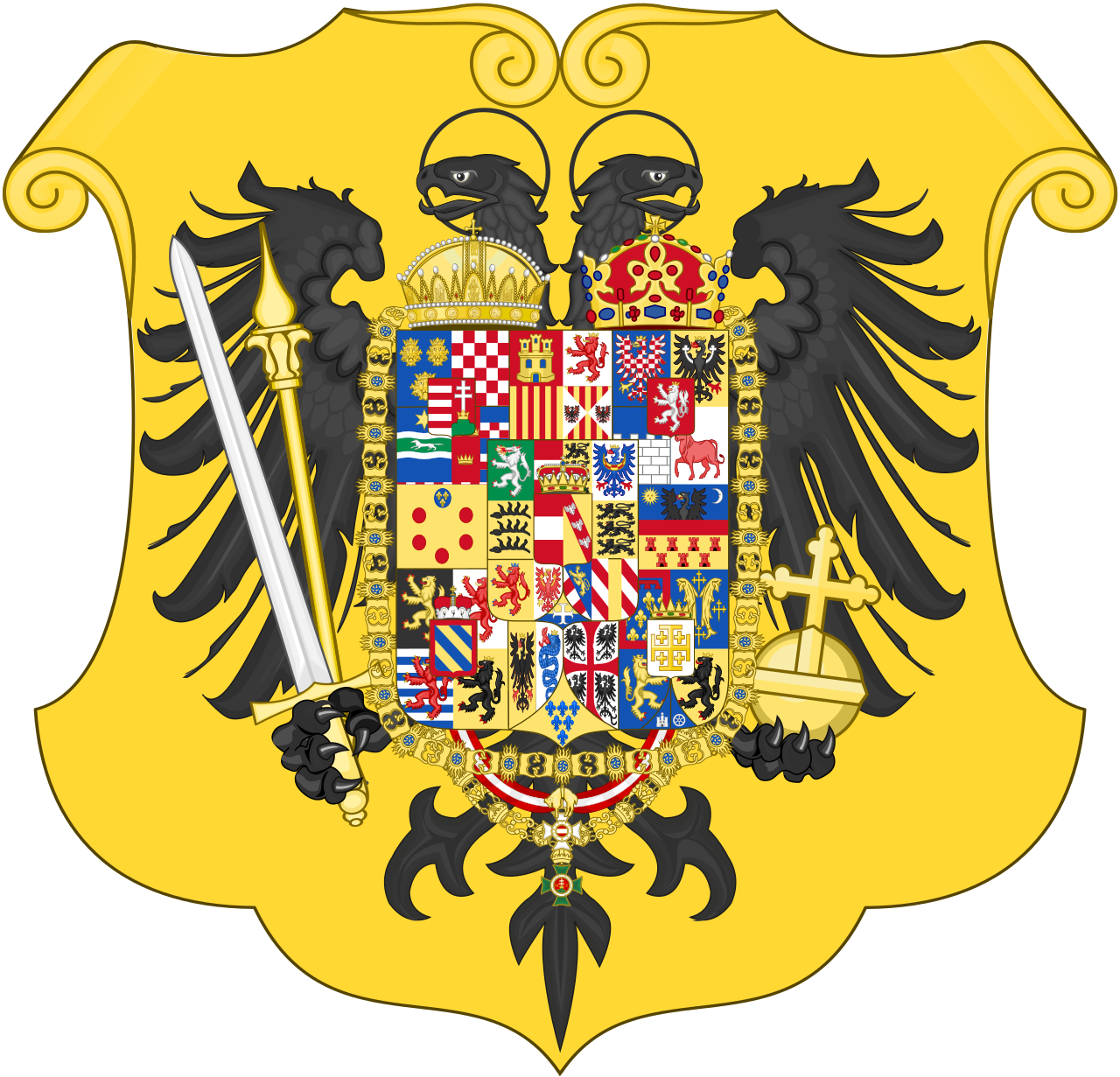
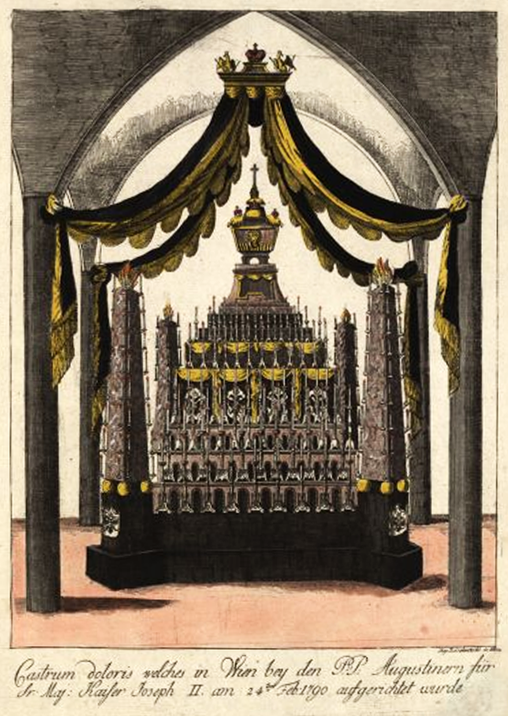
Frequently Asked Questions
What were Joseph II's major reforms and governing philosophy?
Joseph II governed as an enlightened absolutist, driving sweeping secularisation, liberalisation, and modernisation policies collectively known as Josephinism. His program sought to centralise state authority and curtail the power of the Catholic Church, but fierce clerical and aristocratic resistance meant many reforms were only partially implemented.
Why is Joseph II considered a pivotal figure in the history of pioneering governance?
Joseph II is seen as a trailblazer who attempted to remake an entire empire through rational, top-down modernisation rather than slow, incremental change. His bold challenge to entrenched religious and aristocratic privileges marked a decisive step from feudal rule toward the modern bureaucratic state.
What was Joseph II's connection to music and the arts in Vienna?
As a committed patron of the Viennese musical world, Joseph II actively supported composers including Mozart and Salieri, commissioning works and shaping the cultural life of his capital. His court became one of the leading centres for opera and instrumental music in eighteenth-century Europe.
More in Explorers & Pioneers 25-30
Elsewhere in the Explorers & Pioneers universe
Spotted an error? Know more?
This is a living reference — every entry is fact-audited, and reader corrections feed straight into our audit queue. Suggest an edit · See this site's audit record